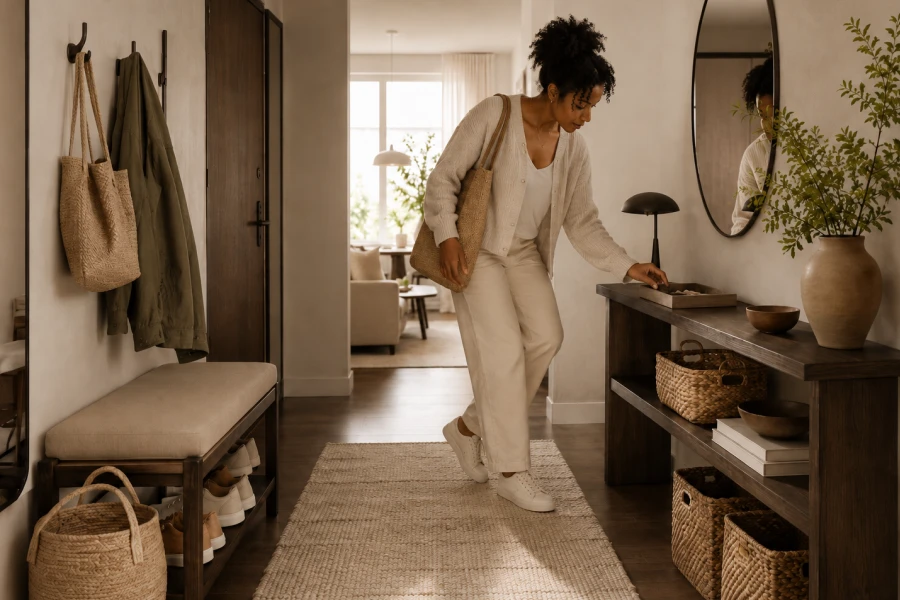
The first few feet inside a home influence how the entire space feels. Clutter-free entryway storage creates an easier transition between the outside world and home life. It prevents everyday belongings from piling up before anyone has time to think. The best setups make order visible, accessible, and forgiving. They allow for hurried arrivals without creating a visual mess. A narrow hallway can still feel composed when every common item has a designated place. Begin with the belongings that appear most often near the door. Then create storage that keeps those items from migrating farther inside. The goal is not emptiness or perfection. It is a useful entry that remains welcoming after a real day.
Every household brings a different collection of items through the front door. Some homes manage mail, school bags, and commuting gear every day. Others need space for dog leashes, deliveries, sports equipment, or stroller accessories. Start by listing the items that regularly land in the entrance. That list helps reveal what deserves permanent storage. A focused entryway clutter control plan keeps frequent belongings from spreading across surfaces. Do not organize imaginary categories that rarely appear in your routine. Prioritize the things that create visible disorder within minutes. Give those items the best spots first. Once daily clutter has boundaries, the room becomes easier to maintain.
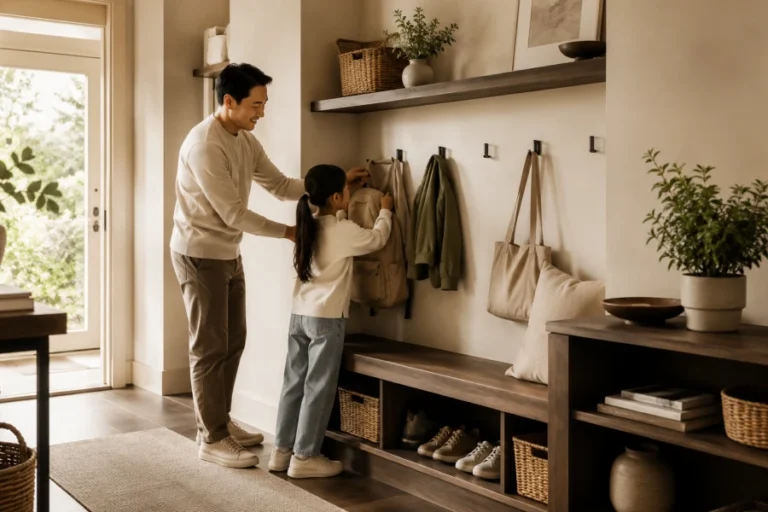
Hidden storage looks clean, but it can fail when it is too difficult to access. People rarely open a complicated cabinet during a rushed arrival. Open hooks, shallow bins, and simple baskets encourage quick returns. Use closed storage for bulky objects or categories that look visually busy. Combine both approaches to balance convenience and calm. A narrow entryway solution may include a wall rail, slim bench, and one basket beneath it. Keep the most common tools in plain sight. Tuck away extras that do not need immediate access. This layered approach prevents the room from feeling either cluttered or inconvenient. Storage should make the right action obvious at a glance.
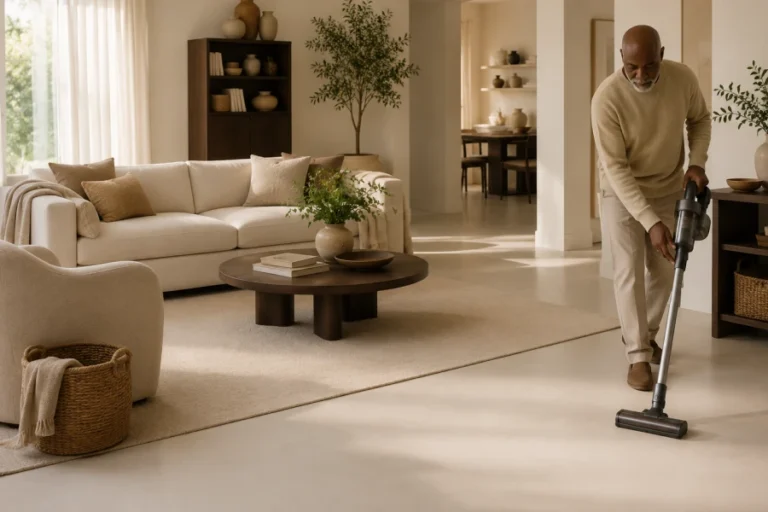
Floors often collect the heaviest and most awkward entryway items. Shoes, bags, umbrellas, packages, and pet supplies can quickly narrow the passage. Prevent that buildup by assigning floor-level storage before clutter appears. A low shelf or under-bench basket works well for shoes and larger accessories. Use a tray for wet footwear during rainy weather. Keep deliveries moving into the home instead of letting them settle beside the door. Avoid placing decorative objects where walking space is already limited. Clear floor space makes a compact entry feel noticeably more generous. It also makes sweeping and vacuuming much easier. When the floor remains open, the whole entryway feels more intentional.
Paper can overwhelm an entryway faster than almost any other category. Mail, receipts, school notices, appointment cards, and packages often arrive at once. Give incoming paper one temporary destination that is easy to review. A wall pocket, shallow tray, or small vertical sorter can work well. Keep only current action items near the door. Move bills, documents, and keepsakes elsewhere as soon as possible. A clear apartment entryway storage approach often depends on preventing paper from taking over limited surfaces. Avoid creating several paper piles with unclear purposes. One visible container creates a simple reminder to sort regularly. That small boundary protects the entire room from visual chaos.
Decorative choices work best when they support function rather than hide it. A mirror can help with last-minute checks while reflecting light into a compact hallway. A runner can define the arrival zone and protect flooring from daily traffic. A small plant can soften hard lines without crowding the storage system. Choose finishes that tolerate normal use, especially near wet shoes and outdoor gear. Limit accessories to a few meaningful objects that do not require constant moving. Use baskets that match the room while still being easy to clean. This creates a space that feels personal without becoming precious. The entryway should serve the household before it performs for visitors. Beauty becomes more convincing when it grows from useful decisions.
A tidy entryway comes from repetition rather than one dramatic organizing session. Build a short routine around returning items after work, school, or errands. Rehang coats, put shoes away, and move paper to its assigned spot. Check the catchall basket before it becomes a second storage room. Reset bags and supplies that need to leave again tomorrow. This process can take less than five minutes when the layout makes sense. Encourage everyone in the household to follow the same simple pattern. Consistency matters more than a flawless appearance. Over time, the entryway becomes a dependable place to arrive home. That sense of order can make the entire home feel calmer.

Leave a comment