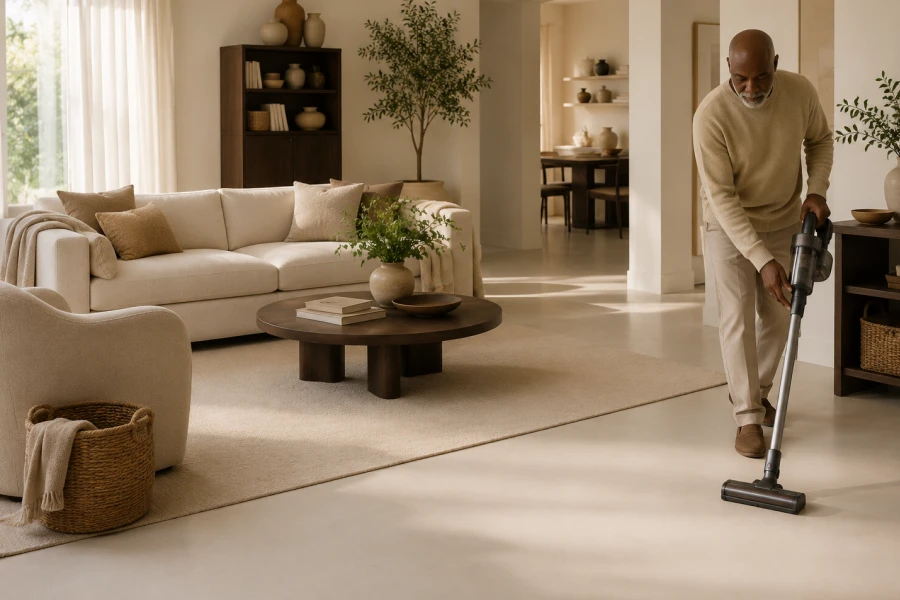
Cleaning feels harder when furniture blocks access to the places that collect dust and debris. Furniture arrangement for easy cleaning creates a room that looks intentional while remaining simple to maintain. It gives you room to sweep, vacuum, wipe, and move through the home comfortably. Many layouts look good from one angle but create hidden cleaning problems behind sofas and tables. A smarter arrangement considers what happens after guests leave. It leaves enough space around furniture for ordinary upkeep. Begin by noticing where dirt gathers and where cleaning tools get stuck. Those places reveal which pieces need more breathing room. The goal is not an empty room. It is a layout that supports the way you actually care for your home.
Cleaning becomes easier when you can reach around and beneath furniture without strain. Leave enough space between major pieces and walls for a vacuum, broom, or mop. Do not push every item tightly against the perimeter simply to create an open center. A thoughtful open floor cleaning path gives you better access while keeping the room comfortable. Consider how you will clean beneath sofas, chairs, beds, and storage pieces. Raised legs can make a significant difference in rooms that collect dust quickly. Avoid placing heavy items where they are difficult to move even slightly. A layout should allow for routine cleaning without becoming a full furniture project. Better access saves time every week. It also helps rooms feel lighter and less crowded.
People need space to walk naturally through a room without brushing against furniture. Clear circulation also makes cleaning tools easier to maneuver. Look at the paths people use between doors, seating areas, storage, and windows. Keep those routes free from unnecessary tables, baskets, and decorative objects. A practical practical room flow reduces both visual clutter and cleaning obstacles. Place furniture where it supports conversation or function without narrowing the walkway. Avoid building a room around one oversized piece that blocks everything else. Smaller adjustments can create more usable pathways than buying new furniture. Clear movement makes the space feel more generous. It also makes daily cleaning far less frustrating.
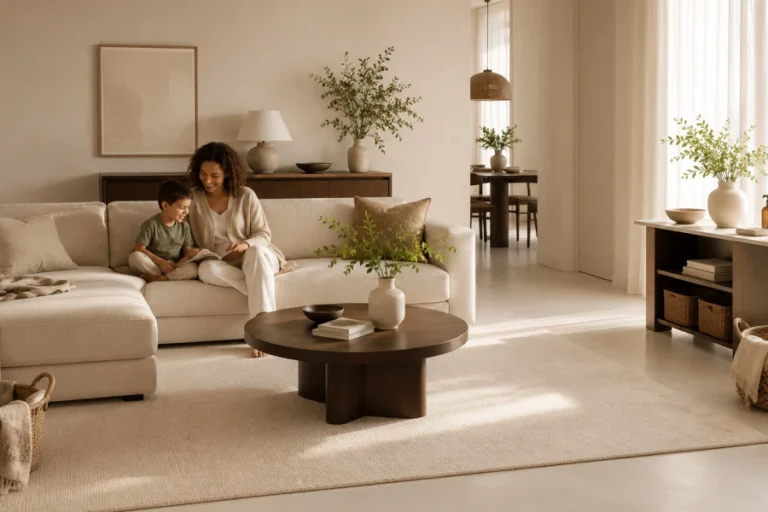
Furniture shape influences how easily dirt collects and how quickly a room can be cleaned. Pieces with simple lines tend to create fewer awkward corners and hidden gaps. Low, heavy furniture may look grounded but can make vacuuming more difficult. Rounded tables can soften circulation in tighter spaces. Lightweight side tables can move easily when deeper cleaning is necessary. Choose rugs that fit the seating area without trapping every edge under multiple legs. Avoid excessive layering when it creates extra surfaces to dust and rearrange. A room does not need to look minimal to be easy to maintain. However, every extra object should justify the cleaning it requires. Simplicity often creates more comfort than a crowded arrangement.
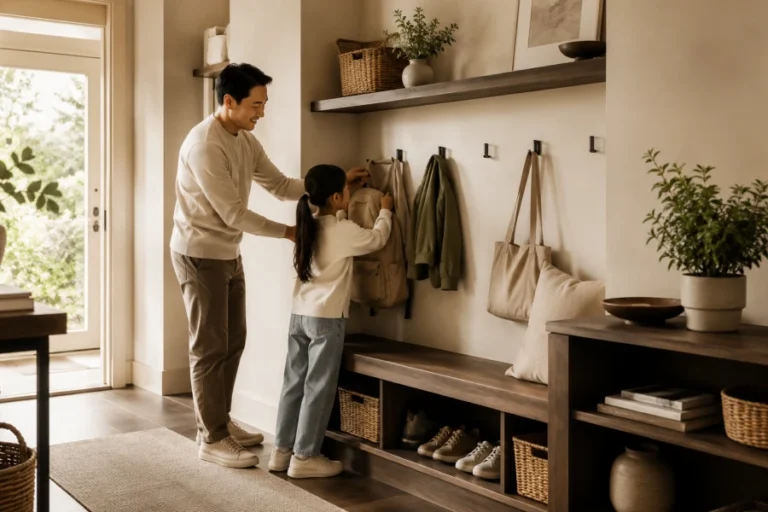
Storage placement can either support cleaning or create more places for clutter to collect. Choose furniture with useful storage only when it truly helps contain everyday belongings. A cleaning-friendly furniture layout keeps baskets, cabinets, and shelves from blocking essential pathways. Keep frequently used storage near the activities it supports. Place blankets near seating, toys near play areas, and charging supplies near work zones. Avoid adding storage pieces that interrupt circulation simply because a wall looks empty. Closed storage can reduce dust on smaller items. Open storage works best when it holds a limited number of easy-to-return objects. The right storage supports both tidiness and access. That balance makes routine cleaning much easier.
Furniture should respond to real household life, including pets, children, meals, and everyday relaxation. Consider where shoes, crumbs, pet hair, and bags tend to accumulate. Give those areas easy access to bins, wipes, or cleaning tools. Place durable surfaces where spills are more likely to happen. Choose upholstery and rugs that fit the household’s realistic maintenance capacity. Keep delicate pieces away from crowded pathways when possible. A room that tolerates daily life will feel more relaxing to use. It will also require less constant correction. Cleaning should support the room, not become the room’s main activity. Functional choices create a home that looks cared for without feeling fragile.
You do not need to redesign an entire room to improve its maintenance. Start by moving one piece that blocks a common cleaning path. Test whether a chair, side table, or storage basket has more useful placement elsewhere. Notice whether you can vacuum more easily after the adjustment. Pay attention to how the room feels during ordinary movement. Small shifts often reveal how much space was being wasted. Keep the changes that improve both function and appearance. Let go of arrangements that only work in photographs. A cleaning-friendly room should serve your everyday life. That practical standard makes each design decision more valuable.


Leave a comment