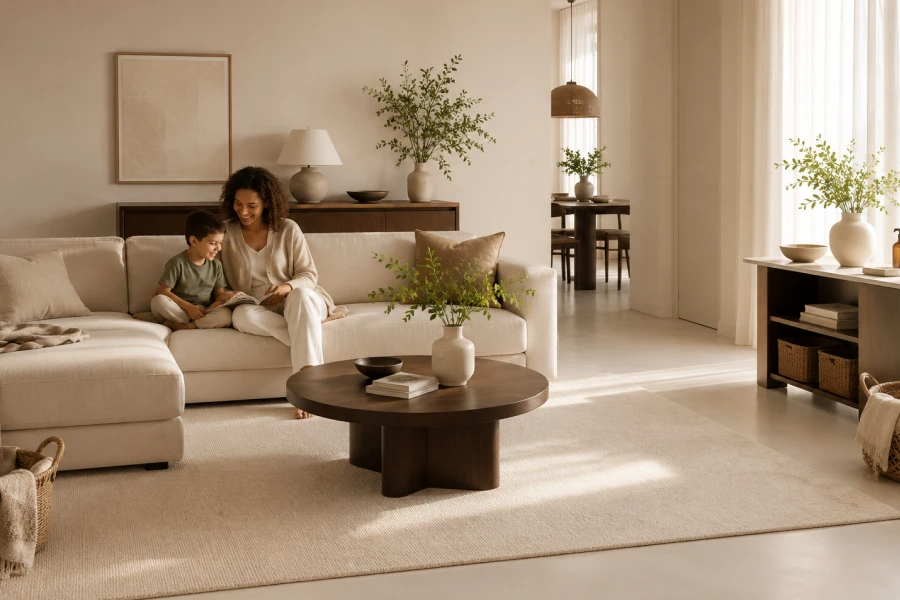
A living room should support rest, conversation, and everyday life without creating a cleaning obstacle course. An easy-to-clean living room layout gives furniture enough space to function without trapping dust in unreachable corners. It considers how the room looks after a normal week, not only after a professional styling session. When surfaces stay accessible, maintenance becomes faster and less disruptive. The best layout makes it easy to vacuum beneath seating, clear coffee tables, and move through the room naturally. Start by looking at where the room feels congested. Notice the spots where furniture forces you to twist, reach, or move several objects before cleaning. Those areas often need less furniture or smarter placement. A little breathing room can improve both comfort and upkeep.
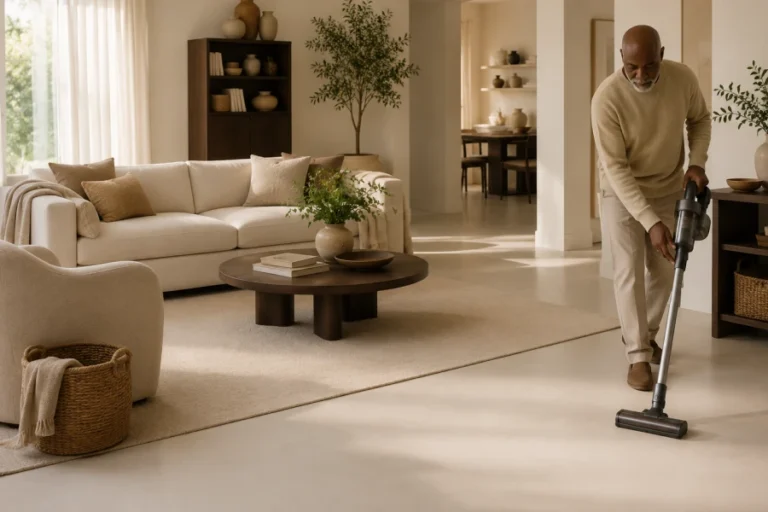
Furniture needs visual space, but it also needs cleaning space. Leave enough clearance around major pieces for a vacuum or mop to pass comfortably. Avoid pressing sofas, chairs, and side tables into tight corners without considering access. A useful clear floor circulation plan helps every part of the room remain reachable. Measure pathways before adding another chair, ottoman, or decorative basket. Choose lighter pieces for areas that need occasional deeper cleaning. Keep rugs large enough to anchor the room but simple enough to maintain. Open floor space can make a living room feel calmer as well as easier to clean. The goal is comfortable spacing, not emptiness. Proper clearance turns maintenance into a manageable routine.
The sofa often determines how the rest of the room must function. Position it where people can sit comfortably without blocking key paths. Leave enough room behind or beside it for dusting and vacuuming. Avoid placing the sofa so close to a wall that cleaning becomes nearly impossible. A low-maintenance furniture placement decision can begin with choosing a sofa that has visible legs. Raised seating makes floor care more straightforward. If the room is small, consider whether a sectional truly improves use of the space. Sometimes a sofa and two lighter chairs create more flexible access. The right seating arrangement should support both gathering and upkeep. Once the sofa works, the rest of the room becomes easier to arrange.
Coffee tables often collect clutter because they sit at the center of the room. Choose one that fits the seating area without crowding circulation. Leave enough room between the table and sofa for comfortable movement. Avoid oversized pieces that become difficult to move during cleaning. Lightweight tables or nesting tables can offer flexibility without sacrificing function. Use trays to group remotes, books, and small objects. This makes clearing the surface much faster when you need more space. Consider an ottoman with a removable tray if your room needs adaptable seating. The best table supports daily use without becoming a permanent clutter magnet. Moveability makes a living room easier to reset whenever needed.
Small obstacles add up quickly in a busy living room. Extra stools, floor baskets, decorative stands, and small accent tables can interrupt both movement and cleaning. Edit the room until each item has a clear role. A focused simplified home layout does not mean removing personality or comfort. It means choosing objects that earn their place. Keep flexible pieces that can move for guests or deeper cleaning. Remove furniture that consistently blocks a pathway or collects clutter beneath it. Use wall-mounted lighting or shelving when floor space is limited. Fewer obstacles make vacuuming quicker and make the room feel more spacious. Thoughtful editing is one of the easiest maintenance upgrades available.
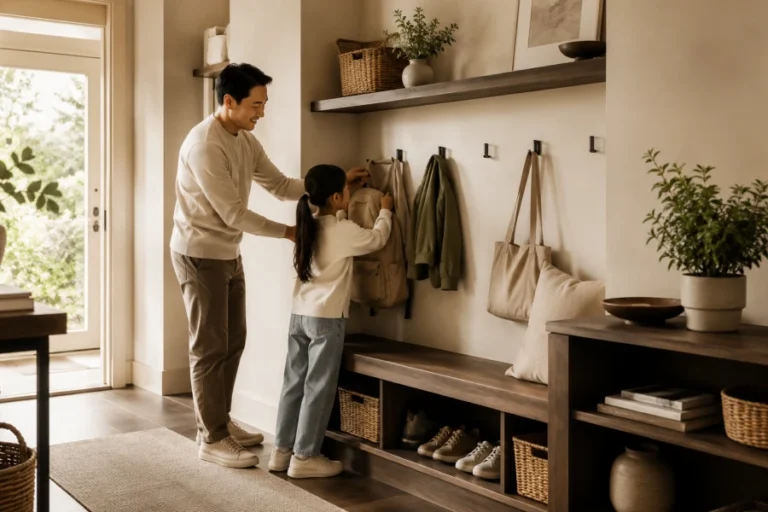
Living rooms often collect blankets, chargers, toys, pet accessories, and reading materials. These items need storage that is close enough to use consistently. Place a small basket beside seating for blankets or current magazines. Use a cabinet or drawer for charging cords and entertainment accessories. Keep toy storage easy for children to reach and easy for adults to reset. Avoid adding deep storage that encourages items to disappear forever. Choose containers that can be emptied quickly when needed. Convenient storage prevents belongings from spreading across floors and tabletops. It also makes cleaning more efficient because fewer objects need to be moved. The room feels calmer when everyday items have nearby homes. Good storage keeps the layout working after the room is lived in.
Use your living room for a few weeks before deciding that the layout is finished. Notice where people sit, where bags land, and where crumbs collect. Watch how easily you can vacuum around the furniture. Adjust pieces that create awkward traffic patterns or difficult cleaning zones. A successful layout should improve daily life, not require constant attention. Do not hesitate to move a chair or shift a rug after testing the room. Small changes can create surprisingly better access. Keep the design flexible enough to respond to changing routines. Over time, your living room can become both more comfortable and easier to care for. That combination makes the room genuinely enjoyable to use.


Leave a comment