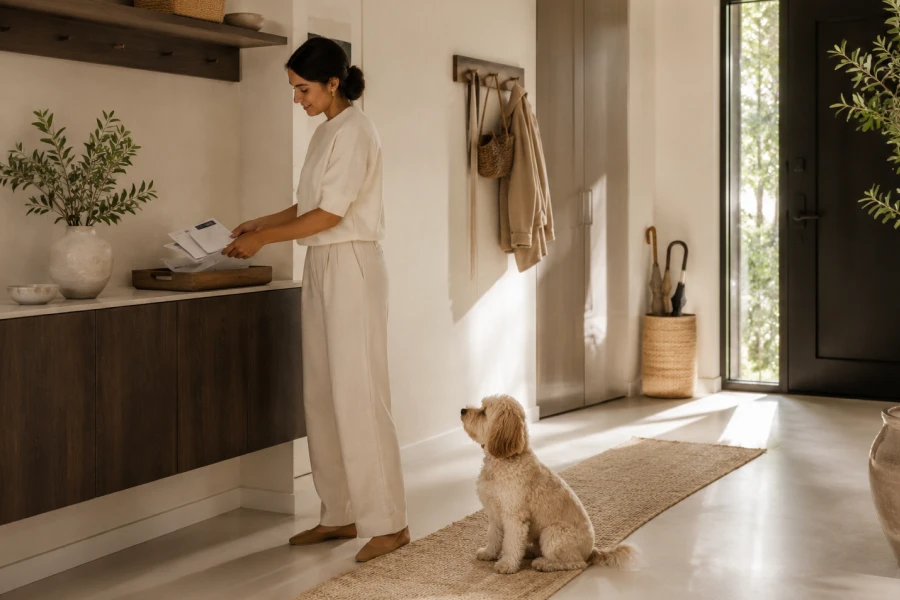
A polished entryway can still fail when it does not reflect everyday behavior. Practical entryway organization begins with routines, not decorative purchases. People need somewhere to place what they carry, remove, and grab again. That simple reality shapes every successful storage decision. A crowded hallway usually signals that belongings lack clear destinations. Watch how everyone enters the home during the busiest part of the day. Then build storage around those repeated moments rather than idealized habits. The most useful systems shorten decisions and reduce backtracking. They make it easier to put things away than leave them out. Once the routine feels natural, the room begins to stay orderly on its own.
Too many choices create clutter because people default to the fastest available surface. A useful entryway needs simple answers for coats, shoes, keys, and packages. Create one obvious place for each category before adding anything decorative. A grab-and-go station can keep sunglasses, chargers, and daily essentials together. Place it near the exit so morning routines stay smooth. Use a tray or shallow basket for items that should not disappear into drawers. Keep backups of common necessities nearby, but not directly in the way. Separate items used every day from those used only occasionally. Fewer visible choices create a calmer visual experience. More importantly, clear choices make tidying feel almost effortless.
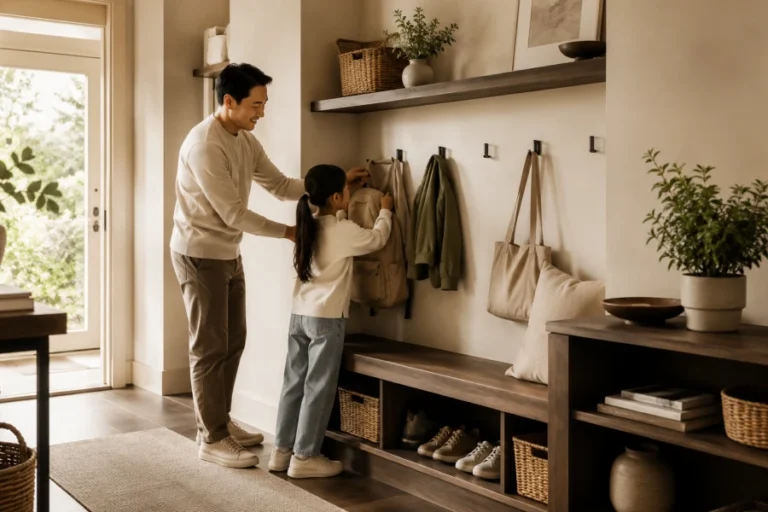
Morning stress often starts before anyone has left the house. Missing keys, misplaced shoes, and forgotten bags can create unnecessary tension. A consistent everyday landing zone helps each person prepare without searching several rooms. Keep the items needed for departures near the door, but do not overcrowd the area. Children benefit from low hooks and baskets that match their reach. Adults benefit from predictable spots for work bags, umbrellas, and outerwear. Make room for items that need attention before leaving, such as library books or returns. Review the setup after one busy week and adjust anything that feels inconvenient. A system should adapt to the household, not the other way around. That flexibility makes mornings noticeably more manageable.
Loose items create more visual noise than larger belongings because they spread quickly. Keys, receipts, gloves, dog accessories, and reusable bags need small but clear boundaries. Use containers that are easy to see into and easy to empty. One basket can hold weather-related items during the current season. Another can collect borrowed objects that need to leave the house soon. Avoid oversized containers that encourage people to toss everything together. A compact organizer works best when each compartment has a defined purpose. Keep surfaces mostly clear so clutter becomes obvious immediately. This approach makes routine maintenance faster because every object has an expected home. Small boundaries often create the largest practical improvement.
Storage placement matters as much as storage capacity. Frequently used items should live between knee and shoulder height whenever possible. That range makes reaching, returning, and grabbing easier for most people. Put seasonal decorations, spare bags, and backup supplies on upper shelves. Keep shoes close to the floor in a cabinet, basket, or under-bench drawer. Choose compact shoe storage that protects the walkway from scattered pairs. Hooks should be low enough for children while still leaving room for adult coats. A slim wall shelf can hold small essentials without consuming floor space. When every zone fits the person using it, habits become easier to maintain. Convenience is the foundation of long-lasting order.
Entryways change with weather, school schedules, travel, and household routines. Winter brings wet footwear, bulkier coats, and more accessories. Summer may require sunglasses, hats, beach bags, and pet supplies. Build in one flexible container that can change with the season. This prevents temporary items from overwhelming permanent storage. Rotate what stays visible based on the next few months instead of the entire year. A dedicated bin for seasonal gear makes transitions simpler and quicker. Keep a small cleaning cloth nearby for wet shoes or muddy paws. These practical details protect the room from becoming a staging area for everything. A flexible layout keeps the entry useful throughout the year.
The strongest systems are not those that never get messy. They are the ones that return to order with very little effort. Set aside a short reset moment after dinner or before bedtime. Hang coats, return bags, clear the floor, and sort incoming paper. Ask whether anything in the entryway belongs in another room. Remove it before it becomes part of the room by default. Keep the reset limited to a few focused actions. That prevents the task from becoming another exhausting household project. Over time, a short reset supports a cleaner entry without much thought. The room begins every morning ready for whatever the day brings.


Leave a comment