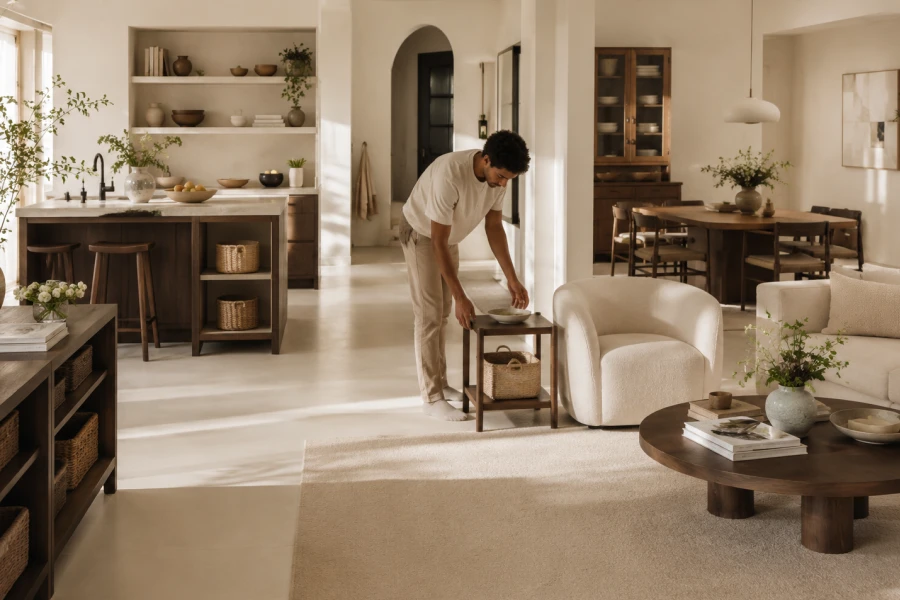
Home maintenance becomes simpler when rooms are planned around access, movement, and real household routines. Space planning for effortless maintenance helps you arrange furniture and storage so cleaning never requires a complicated setup. It considers the spaces around objects, not only the objects themselves. When you can reach surfaces easily, small cleaning tasks happen more often. That consistency keeps messes from becoming overwhelming weekend projects. Start by examining the points where cleaning feels inconvenient. Notice the furniture that blocks pathways, hides dust, or traps clutter behind it. Those obstacles often reveal what the room needs to change. A practical plan makes upkeep part of the natural rhythm of home life. It turns maintenance into something manageable instead of something you postpone.
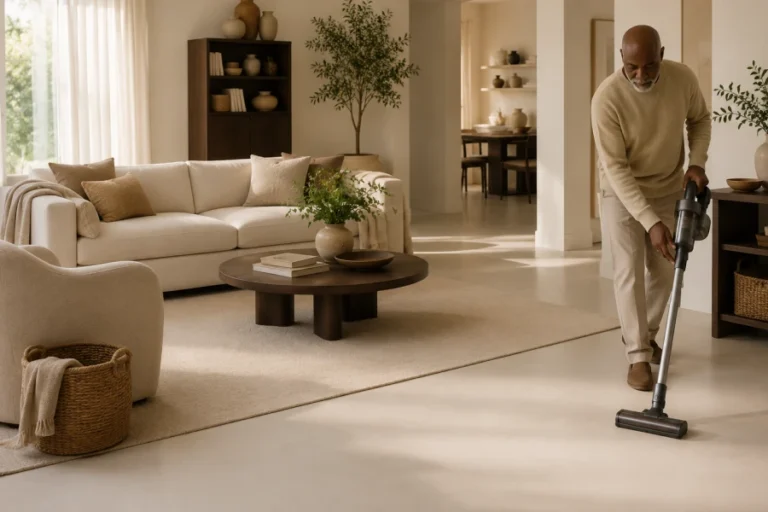
Access is the foundation of an easy-care home. You should be able to reach floors, shelves, windows, and common surfaces without moving half the room. Leave enough clearance around major furniture for a vacuum, mop, or dusting tool. A useful easy-care room design begins by protecting those clearances. Avoid placing storage bins, small tables, or decorative objects where they block routine cleaning routes. Choose furniture proportions that fit the room rather than overwhelm it. Make sure doors, drawers, and cabinets can open fully. Clear access also makes organizing easier because you can see what you own. When a room is reachable, it becomes easier to care for consistently.
Rooms need clear movement paths for people as well as cleaning tools. Look at the route from doorways to seating, storage, and frequently used surfaces. Keep those paths open enough for comfortable daily use. A practical room flow system makes it easier to carry laundry, groceries, toys, or cleaning supplies. Avoid placing furniture where it creates an unnecessary detour. Let large pieces define zones without cutting across circulation. Use lighting, rugs, and wall details to create character rather than adding more floor obstacles. Clear paths make spaces feel larger and more relaxed. They also reduce the time spent moving objects before cleaning. Better movement creates a home that works with you every day.
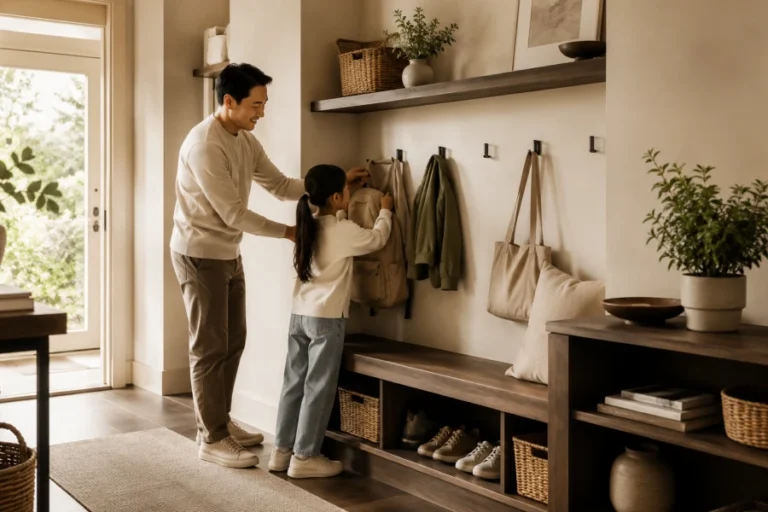
Clutter often appears when useful storage is too far from where items are used. Put baskets, drawers, and cabinets close to the activities they support. Keep reading materials near seating and charging supplies near work areas. Store pet items near the places pets rest or eat. Give household cleaning supplies a convenient home near the rooms that need them. Avoid creating distant storage that feels inconvenient during busy moments. A room stays cleaner when putting things away takes seconds rather than several minutes. Choose storage that matches the volume of belongings you actually own. Small containers can help with smaller categories, but do not overcomplicate them. The most effective storage feels intuitive to everyone in the household. That kind of proximity makes maintenance easier to repeat.
Flexible furniture can reduce effort during both everyday cleaning and deeper resets. Lightweight side tables, movable ottomans, and nesting pieces can adapt to changing needs. They also make it easier to access floors and corners. A thoughtful movable furniture plan gives you options without making the room feel temporary. Choose pieces that can be shifted safely by one person whenever possible. Avoid oversized furniture that locks the room into one difficult arrangement. Flexible pieces are especially useful in apartments and multi-use spaces. They allow the room to expand for guests or simplify for cleaning. Adaptability keeps a home responsive to real life. It also protects the layout from becoming stale or inconvenient.
Cleaning tools are more likely to be used when they are stored nearby and easy to reach. Keep a small set of essentials close to the rooms that need frequent attention. A compact vacuum, microfiber cloths, and a simple dustpan can prevent small messes from growing. Do not hide every tool in a distant utility area if that creates friction. Use attractive containers or discreet cabinets when you want supplies out of sight. Make sure each tool has a home that is easy to return to. This prevents cleaning supplies from becoming clutter themselves. Nearby tools support quick maintenance between larger cleaning sessions. Convenience creates consistency, and consistency makes the home easier to manage. The best setup makes small cleaning actions feel natural.
No floor plan is perfect before people actually live in it. Spend time noticing where clutter gathers and where cleaning feels awkward. Watch how furniture affects movement during regular activities. Adjust one obstacle at a time instead of redesigning everything at once. A low-maintenance furniture placement choice may be as simple as shifting a chair away from a wall. Small changes can dramatically improve access and circulation. Keep what works and revise what creates repeated frustration. Over time, the room begins to support your routines more naturally. That ongoing observation is what makes a layout genuinely sustainable. Easy maintenance grows from spaces that continue to fit your life.


Leave a comment