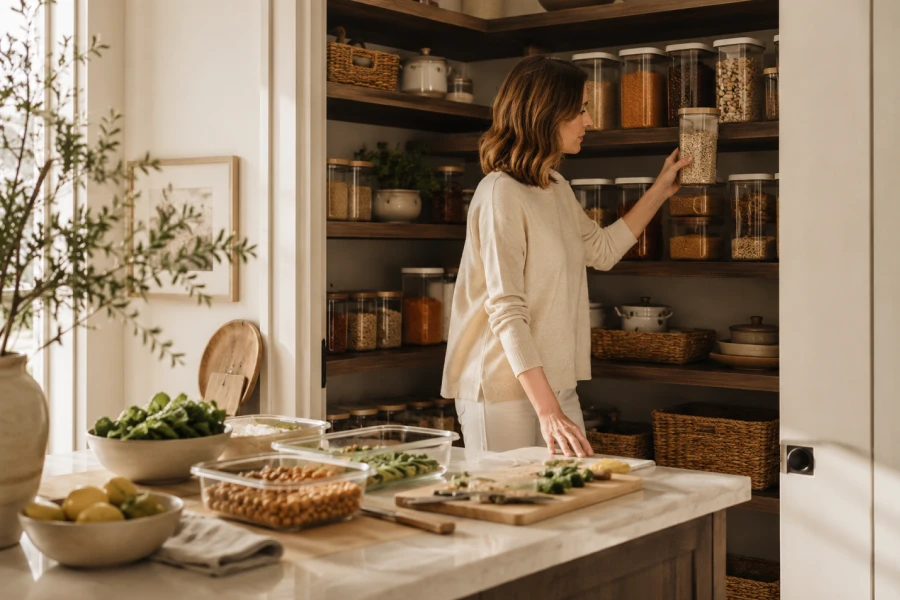
Meal preparation feels simpler when pantry ingredients are visible, grouped, and easy to reach. Pantry organization for meal prep creates a reliable foundation for faster breakfasts, lunches, and dinners. It helps you see what is available before buying more food. That visibility makes planning less stressful and reduces unnecessary waste. A crowded pantry often hides useful staples behind half-used packages and oversized containers. Begin by identifying the foods that support your regular meals. Then organize them around how often and how quickly you use them. The aim is not picture-perfect shelves that nobody wants to touch. It is a practical pantry that answers the question of what can I make tonight. Once that answer becomes easier, meal preparation feels far more manageable.
The most useful pantry reflects the meals your household actually eats. Look at a typical week before deciding where each category belongs. Notice which grains, canned foods, sauces, snacks, and spices you reach for repeatedly. Put those items in the most accessible shelf zones. A thoughtful dinner prep strategy starts with ingredients that are easy to find during busy evenings. Keep meal-specific basics together when that makes planning simpler. Pasta, sauce, canned tomatoes, and spices can live near one another. Breakfast staples should also have a clear home. Organizing around real meal patterns gives the pantry a purpose. It becomes a useful planning tool instead of a storage puzzle.
Deep shelves often hide ingredients that would otherwise become useful meals. Use bins, baskets, risers, or shallow containers to bring items forward. Clear containers can help with dry staples when they are practical for your household. Keep labels simple and readable, especially for shared kitchens. A strong pantry visibility system helps you notice low supplies before shopping day. Group foods by category, but stay flexible when a meal routine changes. Avoid overcomplicated sorting methods that take too long to maintain. The easier it is to see what you own, the easier it is to use it. Good visibility makes the pantry more helpful every day.
Not every meal needs a detailed recipe or a long preparation session. Create one shelf or basket for ingredients that can become a quick meal. Include grains, canned beans, soup bases, sauces, and other versatile staples. Keep those foods near basic cooking tools when possible. A weekly grocery reset can replenish this area before hectic days arrive. Choose foods that work across several meals rather than only one recipe. That flexibility gives you more options when plans change. You may still order takeout sometimes, and that is completely normal. However, a quick-choice shelf makes home cooking easier to begin. It lowers the mental effort required to decide what comes next.
Containers should make food easier to use, not create another maintenance burden. Keep products in their original packaging when it works well for your routine. Transfer only the foods that become difficult to store, see, or measure. Choose containers that stack securely and open without effort. Avoid buying matching organizers before understanding the pantry’s actual needs. A few flexible bins often work better than a wall of specialized containers. Use baskets for snacks, baking supplies, or smaller packets that tend to shift. Keep heavy items on lower shelves for safer access. Store rarely used appliances or bulk purchases in less convenient locations. The right containers support the system without becoming the system.
A pantry needs room for seasonal foods, special ingredients, and unexpected purchases. Leave a little open space instead of filling every shelf completely. That space makes it easier to put groceries away quickly. It also prevents a single new item from causing a complete reshuffle. Use one flexible bin for ingredients that need to be used soon. Keep another for occasional snacks, holiday items, or limited-time products. Review these areas before shopping so food does not get forgotten. A pantry can remain organized without staying completely static. The key is to preserve the main structure while allowing room for real life. Flexible storage keeps meal planning practical rather than rigid.
Pantries stay useful when they receive small, consistent attention. Spend a few minutes each week checking what needs restocking or using soon. Move older items forward before opening something new. Return stray ingredients to their proper categories after cooking. Wipe up small spills before they become a larger cleanup task. Remove packaging that is empty, damaged, or no longer useful. Keep a short shopping list nearby or in a trusted digital note. This prevents you from guessing at the store. Small resets also reveal which categories are no longer working well. Adjust shelf placement when your meal habits change. A pantry that evolves with you will continue supporting easier cooking.


Leave a comment