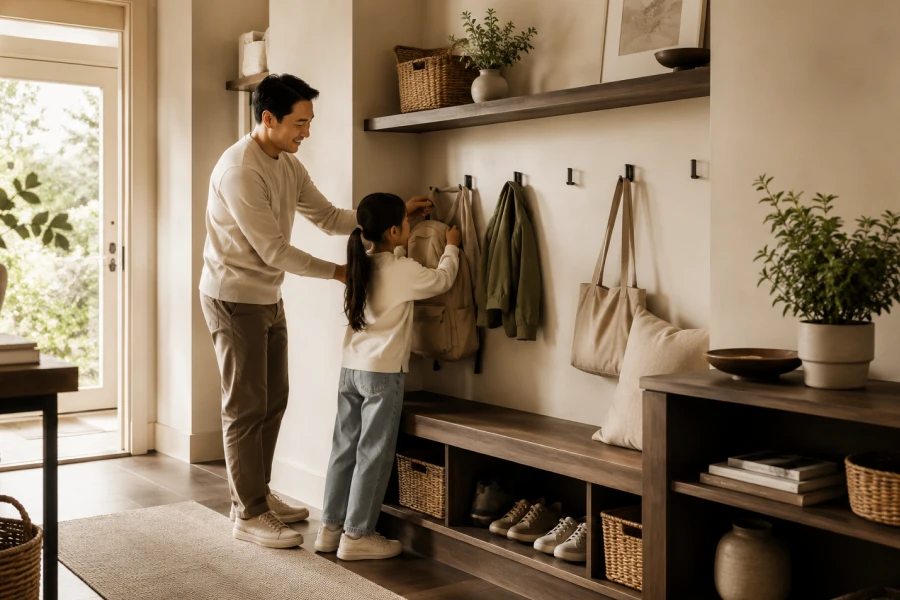
An entryway rarely feels large enough when coats, bags, shoes, and mail arrive together. The real issue is usually unmanaged transition, not limited square footage. Entryway storage for small spaces works when it anticipates the exact items people bring home. It should welcome daily motion without turning the doorway into a holding pen. Begin by watching one ordinary arrival from door to next room. Notice what gets dropped, where it lands, and why. Those patterns reveal the storage jobs your home actually needs. A beautiful bench cannot solve a problem it was never assigned. Instead, give every recurring object a visible, reachable destination. The result is a calmer threshold that supports the rest of the home.
Start with the objects that create the most friction during busy arrivals. Shoes, keys, outerwear, backpacks, pet leashes, and unopened mail often compete for one narrow surface. A thoughtful hallway drop zone gives those items a predictable landing place. Keep the most frequently used pieces closest to the door. Reserve higher shelves for seasonal accessories and occasional items. Use a narrow tray for keys, earbuds, and wallet-sized essentials. Add hooks at a comfortable height for bags that otherwise reach the floor. Place one basket nearby for items that need to travel elsewhere. This simple rhythm prevents clutter from spreading into nearby rooms. More importantly, it makes leaving home feel less rushed.
Storage becomes practical when it follows the sequence of everyday movement. First, you unlock the door and set down what you are carrying. Next, shoes come off, outerwear gets hung, and smaller essentials need a home. A strong entryway organization system respects that sequence instead of fighting it. Place shoe storage where people naturally pause after entering. Keep coat hooks within easy reach, especially for children and guests. Choose closed storage for visual noise and open storage for frequently grabbed items. A slim bench can combine seating, shoe access, and concealed storage beautifully. Wall space often works harder than floor space in compact homes. When the layout matches real behavior, tidy habits become almost automatic.
Small entryways benefit from furniture that performs more than one useful role. A bench with lift-top storage can hold scarves, umbrellas, and reusable shopping bags. A narrow console can offer a surface without swallowing the walkway. Consider wall-mounted entryway storage when floor clearance matters most. Hooks, rail systems, shelves, and compact cubbies can turn blank walls into useful infrastructure. Avoid adding furniture simply because the space looks empty. Every piece should solve a specific problem, whether that means seating, sorting, or hiding. Clear paths make a small entry feel wider than its measurements suggest. Limit decorative objects so surfaces remain available for daily use. A restrained setup feels intentional rather than unfinished.
A functional entryway also needs visual boundaries that make clutter easier to notice. Use matching baskets or bins to prevent a collection of unrelated objects from taking over. Group similar items together so each category has a recognizable place. One container can hold gloves, another can collect dog-walking supplies, and another can manage returns. Keep colors quiet when possible, especially in a narrow or dim space. Lighter finishes help reflect natural light and soften visual weight. Closed-front cabinets create calm when household items are varied or bulky. Open shelves work best when they hold only a few useful, attractive objects. The goal is not a showroom entrance that nobody can use. It is a welcoming room that still feels composed after an ordinary Tuesday.
Different households bring different clutter patterns through the front door. Families may need a place for school bags, sports gear, and wet-weather layers. Apartment dwellers may need compact solutions that fit beside a single door. Pet owners often need a leash, towel, and cleaning supplies ready for quick walks. Build zones around your actual routines rather than copying an unfamiliar layout online. A family entryway routine becomes easier when each person has one assigned area. Labeling can help children learn where belongings belong, although labels should remain discreet. Adults also benefit from shared expectations around shoes, coats, and incoming packages. The best system feels intuitive to everyone who uses it. That ease is what keeps a compact entry organized long term.
No entryway stays perfect every day, especially during busy weeks. The goal is to make resetting simple instead of making perfection mandatory. Spend five minutes each evening returning stray items to their designated places. Move mail, receipts, and deliveries out of the doorway before they become permanent fixtures. Check the floor for shoes that belong elsewhere. Rehang coats that missed their hooks during a hurried arrival. Empty the catchall basket before it turns into hidden clutter. Seasonal changes offer a useful moment to remove what no longer belongs there. By keeping only current essentials nearby, the room remains easier to manage. A practical entryway should support real life, not demand extra energy from it.


Leave a comment