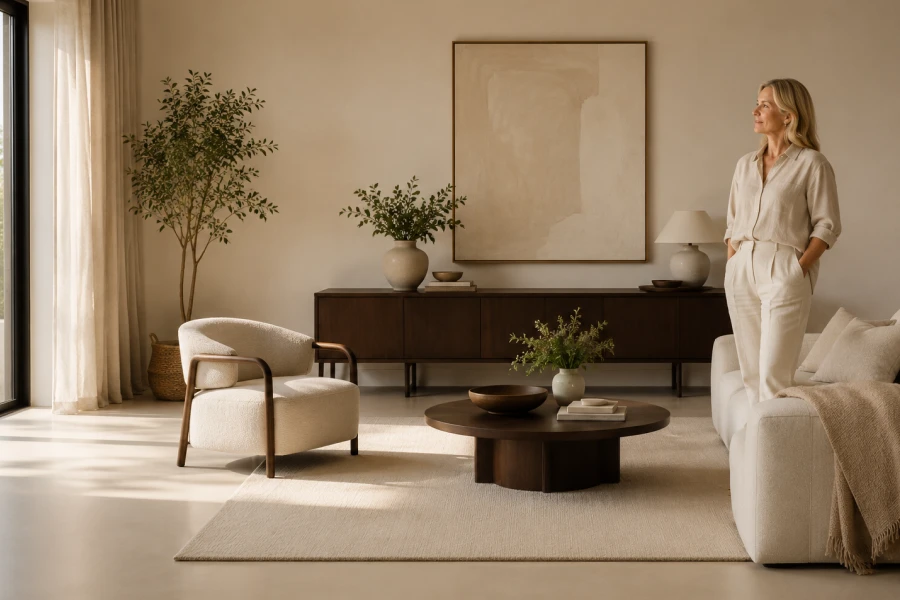
Minimalism becomes most useful when it improves daily comfort instead of simply reducing visual clutter. A minimalist furniture layout creates more room for movement, light, and easier upkeep. It helps a home feel calm after ordinary activities have filled the space. The goal is not to own as little as possible. It is to arrange what you own so that every piece has purpose. Overcrowded rooms often create more maintenance because every surface collects dust and every path becomes tighter. Start by asking which pieces you use, enjoy, and need to access regularly. That question reveals what deserves a permanent place. Once unnecessary obstacles disappear, the room begins to feel more open. A well-edited layout can make both cleaning and living more enjoyable.
Every furniture piece should support a meaningful activity or solve a clear need. A sofa supports rest and conversation. A dining table supports meals, work, and gathering. A storage cabinet may keep everyday items out of sight. Problems arise when furniture stays only because it has always been there. A careful maintenance-minded decorating approach asks whether each item improves the room’s function. Remove duplicates that create crowding without adding comfort. Avoid filling blank corners simply because empty space feels unfamiliar. Open space can improve circulation and make furniture look more intentional. Purposeful choices create a room that feels complete without being overfilled. That is the practical side of minimalist design.
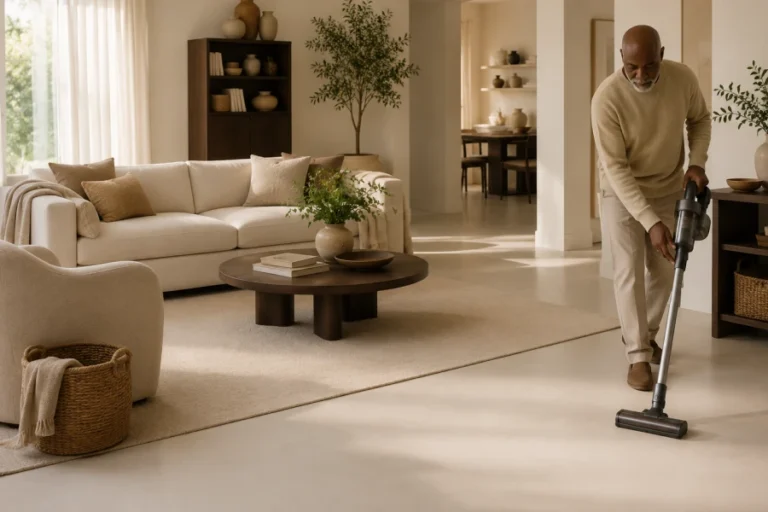
Fewer unnecessary pieces mean fewer surfaces to dust, move, and clean around. This does not require a stark room with no warmth or personality. It simply encourages thoughtful choices about what stays on the floor. A robot vacuum friendly layout can be especially helpful in homes with busy schedules or pets. Keep pathways clear enough for cleaning tools to move freely. Choose furniture with legs when possible so dust does not gather in inaccessible areas. Limit low, heavy pieces that block regular floor care. Reduce decorative layers that require constant rearranging before cleaning. Simple placement turns everyday maintenance into a shorter task. Less obstruction often leads to more consistent cleaning habits.
Rooms need flexibility because routines, seasons, and household needs can change. A layout that fills every available corner is difficult to adapt. Leave some open space where a temporary chair, play mat, or extra table can fit when needed. Choose lightweight pieces that can move without requiring a major effort. Avoid overcommitting to furniture that only works in one exact arrangement. Flexible rooms feel easier to live in because they can respond to everyday changes. This is especially helpful in smaller homes where every square foot matters. A minimalist approach creates room for practical adjustments. It lets the home support different moments without feeling crowded. Flexibility is a form of comfort that often gets overlooked.
People should be able to walk through a room without navigating around unnecessary objects. Clear pathways make the home feel more welcoming and less stressful. Consider how people move between doors, seating, work areas, and storage. A useful movable furniture plan keeps those routes open while preserving comfort. Place larger pieces where they define a zone without cutting off circulation. Avoid positioning furniture where it forces people to squeeze past corners. Use rugs, lighting, or wall art to create visual definition instead of more floor objects. Natural traffic flow makes rooms feel larger than they are. It also makes cleaning and daily movement easier. A home that flows well tends to feel calmer immediately.
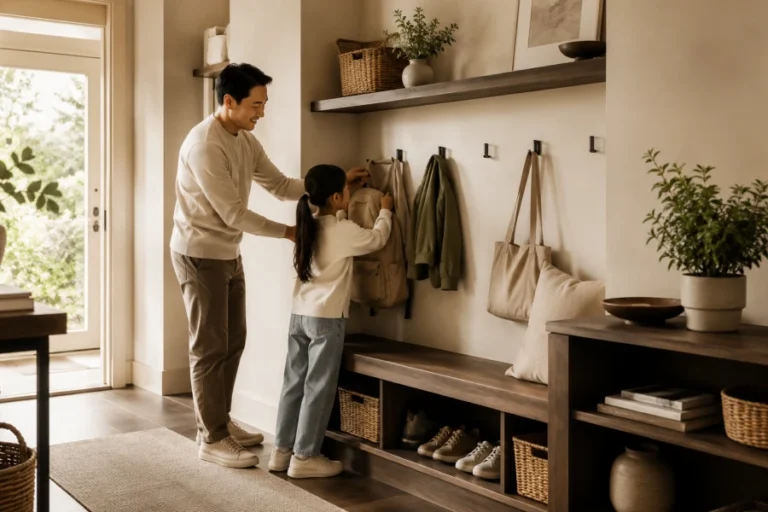
Minimalist rooms still need storage because everyday life produces everyday belongings. The difference is that storage should prevent clutter from becoming permanent décor. Choose a few useful cabinets, drawers, or baskets that fit the room’s main activities. Keep frequently used items close enough to return easily. Avoid adding too many small storage pieces that clutter the floor. Closed storage can help protect visual calm when a household has varied belongings. Open shelves work well when they remain edited and easy to clean. The goal is not to hide everything away. It is to create a reliable home for the items that support daily life. Storage becomes successful when it makes returning things feel obvious. That clarity protects the simplicity of the room.
A minimalist home should still feel connected to the people who live there. Keep meaningful objects, comfortable textiles, and useful furniture that make the space feel welcoming. Edit by function and feeling, not by strict rules or a certain look. A room can remain simple while including art, books, plants, and family details. Choose fewer pieces with more personal value instead of many items with little purpose. Let empty space highlight the things you genuinely enjoy. Revisit the room after a few weeks of normal use. Add what supports comfort, and remove what creates friction. Minimalism works when it creates more ease rather than more restriction. That balance makes the layout sustainable over time.

Leave a comment